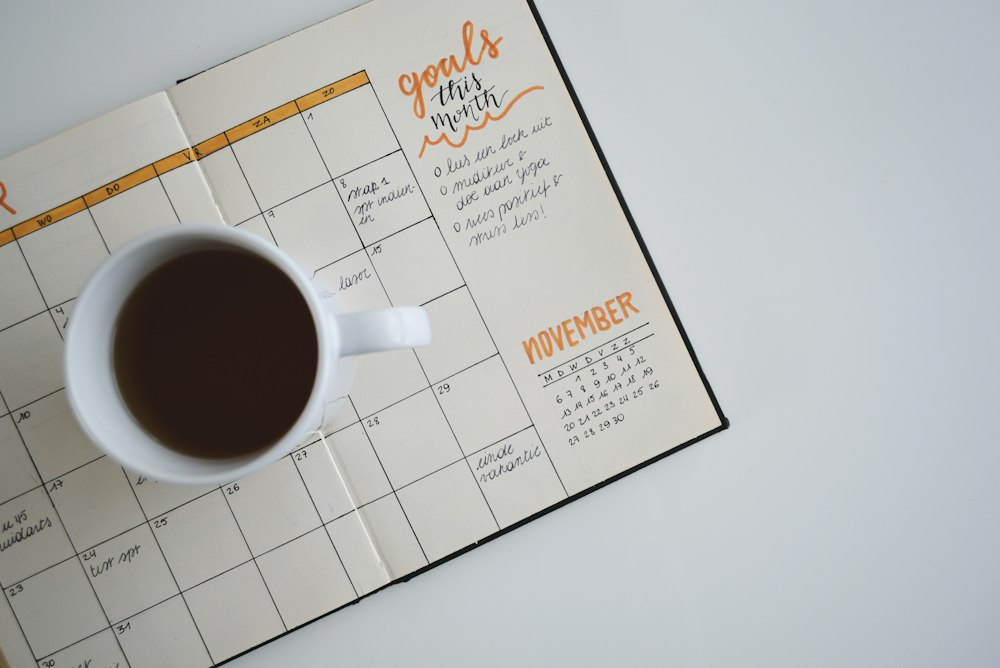
Every student has the same 24 hours. Yet some manage to study multiple subjects, maintain hobbies, sleep well, and still score brilliantly — while others feel perpetually rushed and exhausted. The difference isn't intelligence or willpower. It's time management.
Time management is a learnable skill. This article gives you practical, field-tested strategies that actually work — not generic advice, but specific techniques you can start using today.
Why Students Struggle with Time
Before fixing the problem, let's understand it. Students typically lose time to:
- Unplanned social media use (the average Indian student spends 3+ hours on phone daily)
- Studying without a clear goal for each session ("I'll just open the book")
- Perfectionism — spending too long on one topic and running out of time for others
- No priority system — treating all tasks as equally urgent
- Not saying no to social plans during exam season
Strategy 1: Weekly Planning Every Sunday
The most powerful habit you can build is spending 20–30 minutes every Sunday planning the week ahead. Here's exactly how:
- List all subjects you need to cover that week
- Assign each a time slot based on upcoming tests, exam dates, and your personal energy levels
- Block non-negotiables first — sleep (7–8 hrs), meals, school/coaching hours
- Fill the remaining blocks with study sessions, starting with the most difficult subject when your energy is highest
- Leave 20% buffer time — things always take longer than expected
📅 Sample Weekly Study Block Structure
- Morning (6 AM – 8 AM): Hardest subject — Mathematics, Physics, Chemistry
- Post-school (4 PM – 6 PM): Medium difficulty — History, Biology, English Literature
- Evening (8 PM – 9:30 PM): Light revision, flashcards, reading comprehension
- Night: No heavy studying — sleep is when your brain consolidates memory
Strategy 2: The Pomodoro Technique
The Pomodoro Technique is a time-boxing method that works brilliantly for students who struggle to stay focused. Here's how it works:
- Set a timer for 25 minutes
- Study with complete focus — no phone, no breaks — until the timer rings
- Take a 5-minute break (walk, stretch, drink water)
- Repeat 4 times, then take a 20–30 minute longer break
Why does this work? The time pressure makes the task feel manageable, and your brain knows a break is coming so it doesn't wander as much. Many top students use 4–6 Pomodoro blocks per day and find it far more effective than sitting for 4 hours straight.
Strategy 3: The Priority Matrix (Eisenhower Matrix)
Not all tasks are equally important. Use this simple 2×2 matrix to decide what to do when:
- Urgent + Important: Do immediately — exam tomorrow, assignment due today
- Not Urgent + Important: Schedule it — long-term exam prep, project work
- Urgent + Not Important: Delegate or minimise — minor errands, casual messages
- Not Urgent + Not Important: Eliminate — random scrolling, excessive TV
Most students spend the majority of their time in "Urgent + Important" mode because they ignored the "Not Urgent + Important" tasks. The key is to spend more time in the second quadrant — proactive study — so you're never scrambling at the last minute.
Strategy 4: Time Tracking for One Week
For one week, track everything you do in 30-minute blocks. Just write it in a notebook: "Watched YouTube, 90 mins." "Studied Chemistry, 45 mins." "WhatsApp, 60 mins."
At the end of the week, you'll see exactly where your time goes. Most students are shocked — they think they study 6 hours a day, but actually only study 2–3 hours productively. The rest is passive, distracted reading.
Strategy 5: The Two-Minute Rule
If a task takes less than 2 minutes — do it immediately. Don't add it to a list. This applies to: writing down a homework assignment, saving a webpage for reading, messaging a teacher about a doubt. Getting small tasks out of the way immediately clears mental space for deeper work.
Strategy 6: Phone Management
Your smartphone is the single biggest threat to your study time. Here's how to reclaim control:
- Keep your phone in another room during study sessions — not just face-down, in another room
- Use app timers (Digital Wellbeing or Screen Time) to limit social media to 30–45 mins/day
- Create a "Do Not Disturb" schedule from 6 PM to 10 PM during exam season
- Tell friends you'll be offline during study hours — they'll understand
- Reward yourself with phone time only after completing a study block
The Myth of Multitasking
Many students try to study while watching TV, listening to music with lyrics, or checking notifications. Research is clear: multitasking for cognitive tasks reduces efficiency by up to 40%. You're not doing two things at once — you're doing two things poorly.
The solution is simple: single-task. When you study, only study. Give the task your full, undivided attention. You'll finish faster and retain more.
⏰ This Week's Challenge
- Day 1: Track all your time for one full day — every 30 minutes
- Day 2: Plan next week's study sessions (Sunday planning)
- Day 3: Try 4 Pomodoro blocks — report back how many you completed
- Day 4: Phone in another room for all study sessions
- Day 5–7: Continue and notice the difference
Learn Better with Expert Guidance
At Alam Academy, we teach students not just what to study — but how to study. Our structured coaching builds the habits and discipline that lead to consistent high performance. Start with a FREE 2-day demo class.
Book Your Free DemoFinal Thoughts
Time management isn't about squeezing more studying into your day. It's about making every hour you do study count. A student who studies for 3 focused hours using these techniques will consistently outperform a student who "studies" for 8 hours with a phone in hand and no clear goal.
Start small. Pick one strategy from this list and implement it tomorrow. Then add another next week. Within a month, you'll be the student others ask "how do you manage to do it all?"
